How Music Helps Children Learn Faster and Remember More

Introduction
Music is one of the most powerful tools in a child’s learning journey. Long before children can read or write, they can listen, sing, and respond to rhythm. This natural connection between music and the human brain makes learning through songs one of the most effective methods in early childhood education.
At Watoto Sing, we believe that music is not just entertainment—it is a bridge to faster learning, better memory, and deeper understanding.
1. Music Activates Multiple Areas of the Brain
When children listen to or sing music, their brains become highly active. Music stimulates both the left and right hemispheres of the brain, which are responsible for language, memory, emotions, and creativity.
Unlike traditional learning methods that focus only on reading or writing, music engages the whole brain. This makes it easier for children to absorb and process information quickly.
2. Rhythm and Repetition Improve Memory
One of the key reasons children remember songs easily is rhythm and repetition. When information is combined with a beat or melody, the brain naturally stores it in long-term memory.
This is why children can remember entire songs after only a few listens, but may struggle to remember spoken instructions. Educational songs turn learning content into something memorable and fun.
3. Music Makes Learning Emotional and Engaging
Children learn best when they are emotionally engaged. Music naturally creates emotional connections through melody, rhythm, and tone.
When a child enjoys a song, they are more likely to stay focused and retain the message behind it. Whether the lesson is about kindness, hygiene, or numbers, music makes it feel personal and meaningful.
4. Songs Simplify Complex Concepts
Difficult ideas can be simplified through music. Concepts like numbers, alphabets, shapes, or moral lessons become easier to understand when broken into lyrics and repeated in a song.
For example, instead of memorizing a long explanation about sharing, a song can clearly express the message in a simple and enjoyable way that children can easily understand and apply.
5. Music Encourages Active Participation
Unlike passive learning methods, music encourages children to sing along, clap, dance, and move. This physical involvement strengthens understanding and helps children stay focused.
Active participation also improves coordination, confidence, and communication skills, making learning a complete developmental experience.
6. Music Builds Long-Term Learning Habits
When children grow up learning through music, they develop a positive attitude toward education. They begin to associate learning with joy rather than pressure.
This early foundation helps build lifelong learning habits, curiosity, and creativity, which are essential for future success.
7. The Watoto Sing Approach
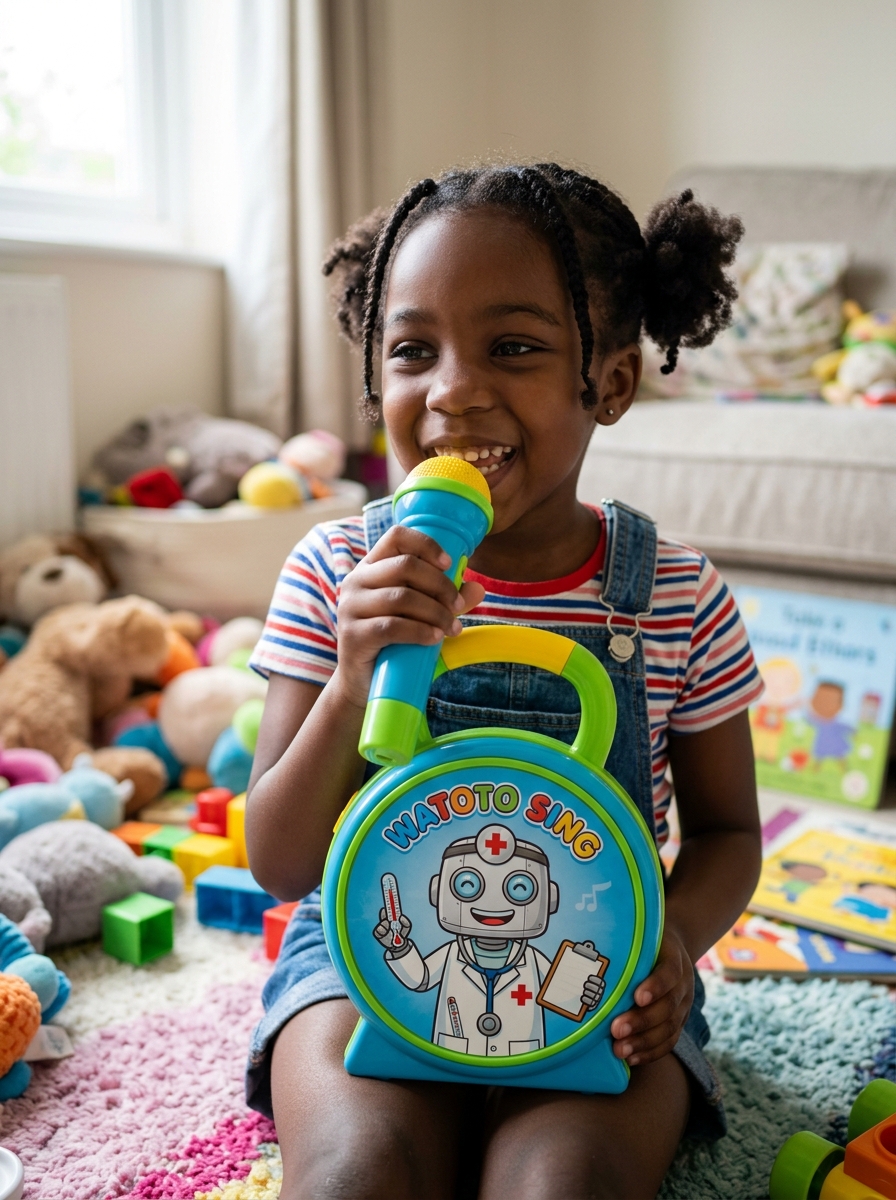
At Watoto Sing, we use music, storytelling, and visual characters to enhance children’s learning experience. Each song is designed with a clear educational message and paired with memorable visuals that help children connect sound with meaning.
Our approach ensures that children not only enjoy the music but also remember the lessons for a long time. This combination of sound, image, and storytelling makes learning more powerful and effective.
Conclusion
Music is more than just sound—it is a learning tool that shapes how children think, feel, and grow. By combining education with music, children learn faster, remember more, and enjoy the learning process.
At Watoto Sing, we are committed to using music as a force for education, creativity, and positive development in children’s lives.
Because when children learn through music, they don’t just memorize—they understand, feel, and remember.